Anandamide—also known as N-arachidonoylethanolamine—is a fatty acid neurotransmitter from the N-acylethanolamine family. Its name derives from the Sanskrit word ananda, meaning “joy” or “delight,” reflecting its role in uplifting mood and modulating pain via the endocannabinoid system. But, because it’s quickly broken down by the enzyme FAAH, we don’t always get to bask in anandamide’s “bliss” for very long.
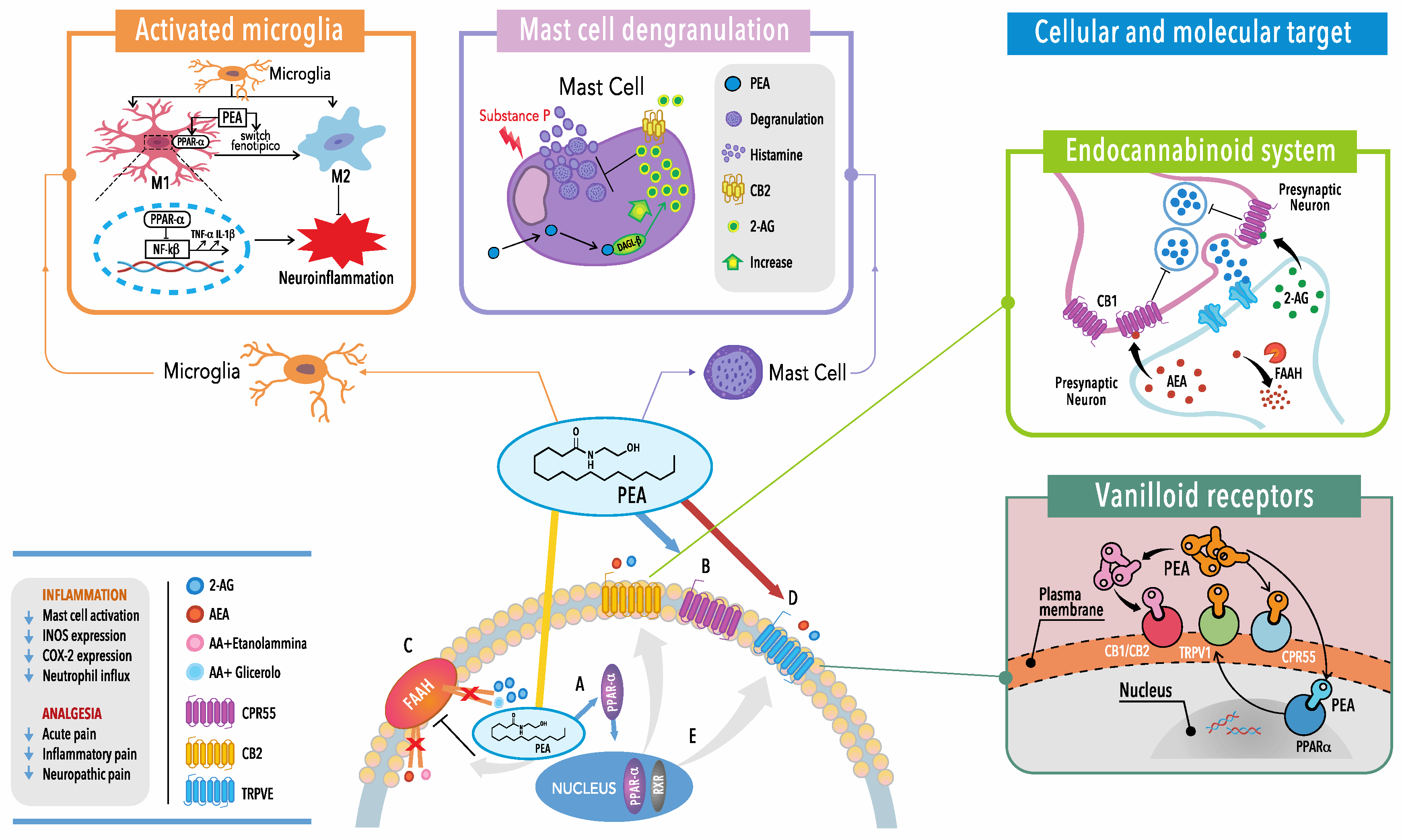 Image credit: A Decades-Long Journey of Palmitoylethanolamide (PEA) for Chronic Neuropathic Pain Management
Meet PEA (Palmitoylethanolamide)
That’s where PEA steps in. While PEA is best known for reducing the breakdown of anandamide (indirectly prolonging its benefits), it also has direct effects of its own:
- CB1 and CB2 Receptors: PEA can bind to both, with a stronger affinity for CB2, which helps manage pain and inflammation without the psychoactive “high” typically associated with CB1 activation.
- TRPV1 and TRPA1 Ion Channels: PEA functions as an agonist at both channels—key gates for pain signals. By modulating the influx of calcium ions in these neurons, PEA can help dial down the intensity of pain sensations triggered by heat, acidity, cold, or pungent chemicals.
Why It Matters
- Neuropathic & Inflammatory Pain: Research suggests PEA may offer significant relief for chronic or nerve-related pain by dampening overactive pain pathways.
- Fewer Side Effects: Unlike opioids or certain NSAIDs, PEA generally has a low side-effect profile, making it a promising alternative or complement to traditional pain therapies.
- Neuro-Immune Balance: By engaging immune-modulating receptors (such as CB2) and stabilizing mast cells, PEA may also aid in neuro-inflammatory conditions, offering potential benefits for migraine, fibromyalgia-like symptoms, or chronic inflammatory disorders.
Conclusion
PEA is exciting because it tackles pain at multiple entry points—supporting anandamide’s bliss effect while directly engaging CB2, TRPV1, and TRPA1 receptors. For anyone seeking a more nuanced, science-backed approach to pain relief and inflammation control, PEA merits a closer look.
Note: This post is not medical advice; always do your own research and consult with a qualified healthcare professional before making changes to your health regimen.